
Framing the Youth Opioid Problem in Denmark: How Non-Prescription Opioids Gained a Distinct Position in Danish Drug Policy and Differ from Other Youth Drug Practices
11:00am -12:00pm
Thursday, March 26th, 2026
Social Science Centre 5220
A lecture by Jeanette Østergaard
Abstract
In late 2024, the Danish government launched Youth without Opioids (Ungdom uden opioider) to address rising non-medical use of prescription opioids among young people aged 15-25. The initiative followed sustained media attention on tramadol and oxycodone misuse, including among children in lower secondary school. Media coverage highlighted accessibility and portrayed young people as targeted by dealers distributing cheap pills, framing the issue as an emerging “epidemic” with parallels to international crises. Concerns focus on availability and reduced risk perception, particularly as pills are sold in repackaged blister packs signaling legitimacy. A Rockwool Foundation report (Østergaard et al., 2024) found that 4% of adolescents aged 15-19 reported lifetime opioid use, with higher prevalence among 15-year-olds and similar rates across genders - a pattern differing from cannabis and cocaine use. Opioids thus appeared as the second most common illicit substance among very young people, surpassing cocaine.
In this presentation, I will show preliminary findings from ongoing research on youth non-prescription opioid use in Denmark. The research project is based upon a newly collected Nighttime survey, collected in situ at bars across the whole country (n = 1,900), and a nationally representative survey of 15-25-year-olds (n = 5,000). The research project uses these surveys to estimate the prevalence of opioids and other widespread substances such as cocaine and cannabis, informing a critical assessment of whether Denmark faces an opioid crisis.
The presentation also draws on 22 focus group interviews with young people aged 17-20 (n = 132) in which participants ranked substances by perceived danger and social acceptability. Preliminary findings highlight tensions related to stigma and gender, hinting at why it has been so difficult to recruit young non-prescription opioid users, especially girls, for in-depth interviews.
Finally, drawing on 15 individual interviews with young people who have used opioids and other illegal drugs, I investigate young people’s non-prescription opioid use through a temporal lens (Baraitser 2017). Findings suggest that synthetic opioids produce a distinctive experience of slowing, suspending, or stopping time. This contrasts sharply with the accelerated, future-oriented temporalities associated with drugs such as cocaine or MDMA. Participants describe opioid use as legitimizing a mode of “doing nothing,” suspending expectations of productivity, progress, and self-optimization.
Biography
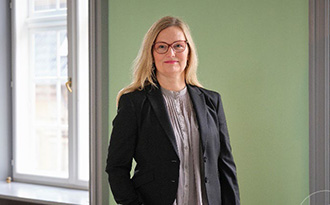
Jeanette Østergaard is Research Professor at the Rockwool Foundation, Denmark. She holds a PhD in Sociology from University of Copenhagen. Her research interests are young people’s transition to adulthood as explored from the perspective of everyday life, marginality, and risk behavior (drinking and drug use), often from a longitudinal mixed methods perspective. She has established several largescale empirical studies, including quantitative and qualitative longitudinal studies focusing on young people.
The Sociology Colloquium Series, brought to you by the Department of Sociology and the Social Science Student Donation Fund, is open to the public, students and scholars of any discipline.